

Neurosurgery — Town Hospital
Town Hospital's Neurosurgery department specializes in brain, tumor, spine and peripheral-nerve surgery using the latest microsurgical and neuro-navigation techniques — the first in Egypt to perform SEEG epilepsy surgery.

What we treat
Doctors — Neurosurgery
Neurosurgery at Town Hospital: an overview
The neurosurgery department at Town Hospital in the Fifth Settlement, New Cairo, diagnoses and treats conditions of the brain, spine and peripheral nerves that may need surgery, in both adults and children. The team brings together professors and consultants in neurosurgery, including faculty members of Al-Azhar University's Faculty of Medicine, several of whom trained or held fellowships in the United Kingdom, France, Germany, Switzerland and the United States.
The team's experience covers brain and skull-base tumour surgery, spine surgery, endoscopic brain and spine surgery, stereotactic and functional neurosurgery, and paediatric neurosurgery. The department uses microsurgery with the operating microscope and neuronavigation, and it was the first in Egypt to perform SEEG for epilepsy surgery, starting in November 2025. Imaging, laboratory, emergency and intensive care are all in the same hospital, so a patient can be followed from diagnosis to recovery in one place.
Procedures performed by our neurosurgery team
Below are the main conditions and procedures the department handles. The right procedure for each patient is decided by the surgeon after examination, a review of the imaging and a discussion of the options with the patient.
Brain and skull-base tumour surgery
Brain tumour surgery covers tumours of the pituitary gland, the brain's ventricles and the skull base, among others, and may be done with the operating microscope or an endoscope depending on the tumour's location. The surgeon aims for complete or partial removal, depending on where the tumour sits and whether it can be reached safely; some slow-growing tumours may only need regular monitoring. Read more in Brain Tumors: Symptoms, Diagnosis, and Treatment.
Posterior fossa tumours
The posterior fossa is a tight space at the back of the skull that holds the cerebellum and brainstem, so surgery there needs careful planning. A tumour in this area can block the flow of cerebrospinal fluid, and some patients need treatment for the resulting hydrocephalus, sometimes before the main operation. Read more about posterior fossa tumours.
Hydrocephalus treatment
Hydrocephalus is a build-up of excess cerebrospinal fluid inside the brain's ventricles. It affects children and adults, and treatment is usually surgical. Options include a shunt with a valve to drain the extra fluid, or, in selected cases, an endoscopic opening that creates a new path for the fluid. The neurosurgeon chooses the approach based on the type and cause of the hydrocephalus. See our article on hydrocephalus.
Brain haemorrhage and head injury
Not every bleed in the brain needs surgery; some cases are monitored carefully in hospital. In others, surgery may be needed to drain a collection of blood and relieve pressure inside the skull, or to treat an aneurysm. The decision is made after imaging and a full assessment. The team also assesses head injuries and concussion. Read about the warning signs of a brain haemorrhage and about stroke.
Trigeminal neuralgia
Trigeminal neuralgia causes repeated attacks of sharp pain in the face, and treatment usually starts with medication. When the pain does not respond, or the patient cannot continue the medication, and a blood vessel is found to be pressing on the nerve, a procedure that separates the vessel from the nerve may be considered. The surgeon decides after a full assessment and a discussion of benefits and risks. More in our article on trigeminal neuralgia.
Lumbar disc herniation
Many people with a herniated disc in the lower back improve with conservative treatment. Surgery is usually considered when there is no response after several weeks or when muscle weakness is getting worse. Loss of bladder or bowel control, or numbness around the groin and buttocks, needs emergency care straight away, because it can signal severe pressure on the nerves. The most common operation is microdiscectomy, which removes the herniated part of the disc. Read Lumbar Disc Herniation: Do You Need Surgery?
Cervical (neck) disc
A herniated disc in the neck can press on nerve roots or the spinal cord, causing pain that spreads down the arm, numbness or weakness. When conservative treatment fails or there is clear pressure on the nerves, options may include anterior cervical discectomy and fusion (ACDF) or artificial disc replacement, depending on the case. Details in Cervical Disc: Symptoms, Causes and Treatment.
Spine surgery
Spine surgery for adults and children includes procedures such as relieving pressure on the nerves by removing part of a vertebra, removing a disc, fusing vertebrae, and replacing a disc with an artificial one in selected cases. The least invasive procedure that can achieve the goal is usually preferred, and the surgeon chooses based on the case. Learn about the types of disc surgery.
Peripheral nerve injuries
Peripheral nerves are the nerves outside the brain and spinal cord, including those that run to the arms and legs, and they can be injured by accidents, cuts or long-standing pressure. The surgeon assesses the type of injury and how much movement and sensation are affected; some injuries may need surgery, depending on their nature and timing.
Endoscopic, stereotactic and functional neurosurgery
Endoscopic brain and spine surgery can reach some areas through small openings. Stereotactic surgery uses three-dimensional coordinates taken from the patient's scans to reach deep targets in the brain precisely, and it is the basis of SEEG. Functional neurosurgery aims to improve how the nervous system works, as in epilepsy surgery and some nerve-pain conditions. The surgeon decides whether these approaches suit each case.
Paediatric neurosurgery
The team includes surgeons experienced in brain and spine surgery for children, including the treatment of hydrocephalus and some brain tumours. The surgeon takes the child's age and stage of development into account when assessing the child and planning treatment, and the family is involved in every decision.
When is surgery needed, and when is it not?
Not every brain or spine condition needs an operation, and non-surgical treatment comes first in many cases, including:
- Most disc herniations in the back and neck.
- Some small bleeds in the brain, which are monitored carefully in hospital.
- Some slow-growing brain tumours, where regular imaging may be enough.
- Trigeminal neuralgia and epilepsy, which are usually treated with medication first; surgery is only considered after a specialist assessment.
On the other hand, surgery may be the better option when there is clear pressure on the brain or nerves, a gradual loss of movement or sensation, or no response to non-surgical treatment. The following signs need emergency care straight away:
- A sudden, severe headache unlike any before.
- Sudden weakness or numbness on one side of the body, or trouble speaking or seeing.
- Loss of consciousness or a seizure, especially after a head injury.
- Repeated vomiting or increasing drowsiness after a head injury.
- Back pain with loss of bladder or bowel control, or worsening weakness in the legs.
Your care, step by step: from assessment to follow-up
- Assessment: the surgeon starts with your history, a neurological examination and a review of any previous scans or reports.
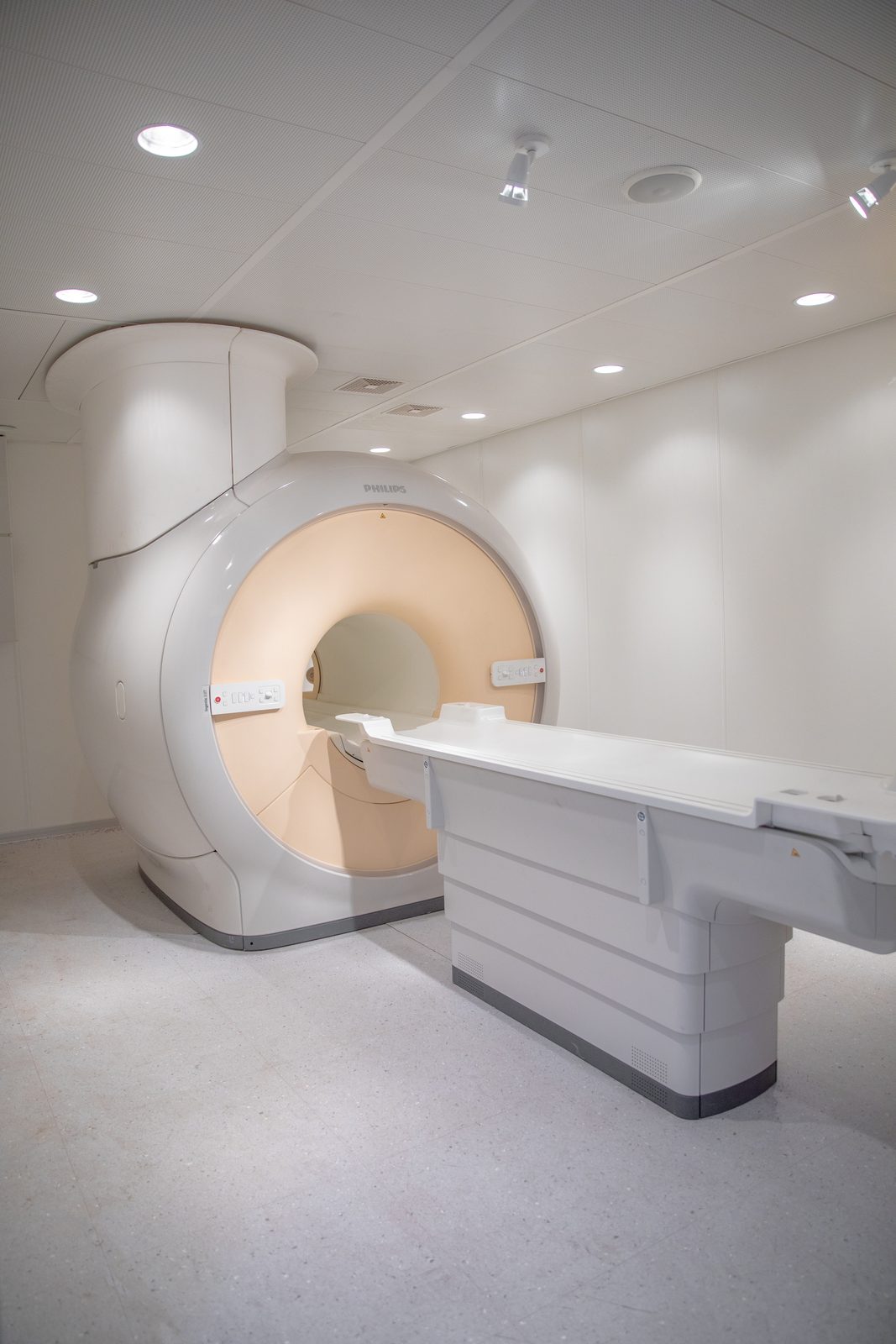
- Imaging: the hospital has a Philips 3 Tesla MRI and a 128-slice CT scanner on site, and radiology and the laboratory run 24 hours a day, which shortens the time to diagnosis.
- Decision: the surgeon explains the options, with the benefits and risks of each, to you and your family before a decision about surgery is made.
- Surgery: where the operation calls for it, neuronavigation is used to plan the surgical path precisely from your own scans; the operating microscope is used for microsurgery, and an endoscope where suitable.
- Intensive care: some operations need a period of observation in the intensive care unit; the medical team decides how long based on the case.
- Follow-up: the surgeon follows your recovery after discharge and reviews imaging when needed.
Emergency care and an on-call neurosurgeon, 24/7
Town Hospital's emergency department is open 24 hours a day, a neurosurgeon is on call day and night, and imaging and the laboratory never close. This matters most in brain bleeds and head and spine injuries, where every minute counts.
SEEG epilepsy surgery: a first in Egypt
Most people with epilepsy respond to medication, but some keep having seizures despite appropriate treatment. In these cases, if the area where the seizures start can be identified, surgery may be worth evaluating.
SEEG (stereo-electroencephalography) places fine electrodes inside the brain using stereotactic planning, to record electrical activity from deep areas and locate where seizures begin when non-invasive tests are not enough. It is a diagnostic step before the epilepsy operation itself: its results help the team decide whether surgery is suitable and how to plan it. Each case is discussed by the neurosurgeon, the epilepsy physician and the radiology team before deciding whether surgery is suitable. Town Hospital's neurosurgery department was the first in Egypt to perform SEEG, in November 2025. Learn about epilepsy surgery at Town Hospital.
The legacy of our founder, Prof. Osama El Ghannam
The late Prof. Osama El Ghannam founded Town Hospital and laid the foundations of its neurosurgery department. A Professor of Neurosurgery, he headed the Department of Neurosurgery at Al-Azhar University in 2002, served as President of the Egyptian Society of Neurosurgeons in 2003, and became Dean of Al-Azhar University's Faculty of Medicine in 2005. The department continues its work in the way he established. Read about Prof. Osama El Ghannam's career.
Frequently Asked Questions
What is the difference between a neurologist and a neurosurgeon?
A neurologist diagnoses and treats conditions with medication and follow-up, such as epilepsy, headaches and stroke. A neurosurgeon handles conditions that may need surgery on the brain, spine or peripheral nerves, such as tumours, disc herniation and hydrocephalus. The two often work together on the same case, as in epilepsy surgery.
Does every herniated disc need surgery?
No. Many people with a herniated disc in the back or neck improve with conservative treatment. Surgery is usually considered when there is no response after several weeks or when muscle weakness is getting worse. Loss of bladder or bowel control, or numbness around the groin and buttocks, needs emergency care straight away. The surgeon decides whether an operation is needed after an examination and a review of the MRI.
Is brain surgery dangerous?
Every operation carries risks, and in brain surgery they vary with the type of condition, its location and the patient's general health, so there is no single answer. Before you agree to surgery, the surgeon explains the expected benefits, the possible risks and the alternatives. Neuronavigation and microsurgery help the surgeon reach the target area more precisely.
What is neuronavigation in brain surgery?
Neuronavigation links the patient's own MRI or CT images to the position of the surgical instruments during the operation, working like a map that guides the surgeon. It helps plan the safest route and locate a tumour or target precisely. The surgeon decides whether to use it based on the type of operation.
What should I do after a head injury or a sudden, severe headache?
A sudden severe headache, sudden weakness on one side of the body, trouble speaking, confusion, or repeated vomiting and drowsiness after a head injury all need emergency care straight away; go to an emergency department or call an ambulance on 123. If the person is unconscious or may have injured their neck or back, do not move them; wait for the ambulance. Town Hospital's emergency department is open 24 hours a day, with a neurosurgeon on call day and night and imaging and laboratory services that never close.
What is SEEG epilepsy surgery, and who needs it?
SEEG places fine electrodes inside the brain using stereotactic planning, to record electrical activity and find where seizures start. It is a diagnostic step before the epilepsy operation itself: its results help the team decide whether surgery is suitable and how to plan it. It may be considered for some people whose seizures continue despite appropriate medication, when non-invasive tests cannot locate the source. Each case is discussed by the neurosurgeon, the epilepsy physician and the radiology team before a decision is made. Town Hospital's neurosurgery department was the first in Egypt to perform SEEG, in November 2025.
Will I need intensive care after brain surgery?
It depends on the type of operation and your condition. Some brain operations need a period of observation in intensive care afterwards, while others do not. The medical team decides whether intensive care is needed, and for how long, case by case, and explains this to you and your family before surgery.
Does Town Hospital treat children who need neurosurgery?
Yes. Town Hospital's neurosurgery team includes surgeons experienced in brain and spine surgery for children, including the treatment of hydrocephalus and some brain tumours. The surgeon takes the child's age and stage of development into account when assessing the child and planning treatment, and the family is involved in every decision.